The detail
Materials, methods and where they apply.
The right flat roof system depends on the substrate, the falls, the exposure, the traffic and the budget. Below is a summary of the systems we fit and how we choose between them.
EPDM rubber membrane
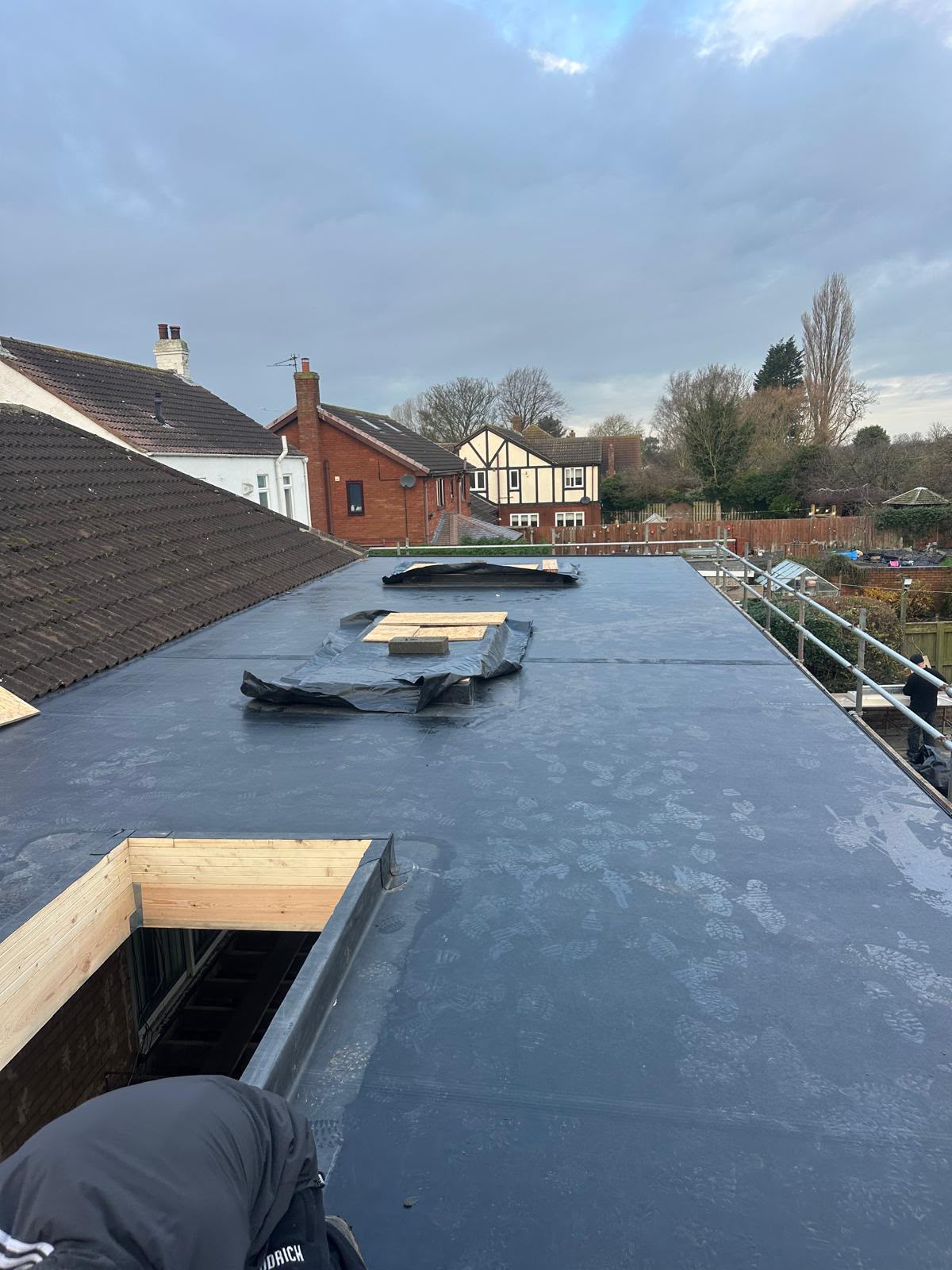
A single-sheet synthetic rubber, typically installed in one piece on domestic extensions and garages. Excellent for cold-applied installation, no hot works, and a 20–25 year manufacturer warranty is standard. Best for straightforward geometries with limited penetrations.
GRP fibreglass
A liquid-applied glass-reinforced polyester system laid in three coats over conditioned OSB3 board. Extremely tough, walkable, and forms a seamless finish around outlets and upstands. Best for balcony roofs, roof terraces and complex shapes with multiple penetrations.
Felt (torch-on and self-adhesive)
Modern SBS-modified bitumen membranes are a world away from the 1980s pour-and-roll. Laid in two layers with a mineral-finished cap sheet, they carry 20-year warranties and remain the most cost-effective large-area system for warehouses and utility roofs.
Liquid systems
Cold-applied polyurethane and hybrid liquids are ideal for retrofits over failing existing roofs, awkward geometries, and buildings where hot works aren't safe. Fully reinforced with fleece, they behave as a single continuous membrane once cured.
Insulation and warm-roof build-ups
Any new flat roof triggering more than 25% coverage of a roof plane needs a Part L thermal upgrade. We build warm-roof systems with rigid PIR insulation and a vapour control layer as standard, sitting the insulation above the structural deck to avoid interstitial condensation.
- Warm roof, insulation above deck, membrane above insulation (default)
- Cold roof, only where warm-roof isn't achievable, with ventilated void
- Inverted roof, for accessible terrace / green roofs
Detailing that decides service life
Every flat roof stands or falls on its details. We spec: minimum 150mm upstands at all abutments, GRP or lead-lined drip edges over gutters, sump outlets with pre-formed collars, and formed corners rather than mitred cuts. It's these details, not the membrane brand, that separate a 10-year roof from a 30-year one.