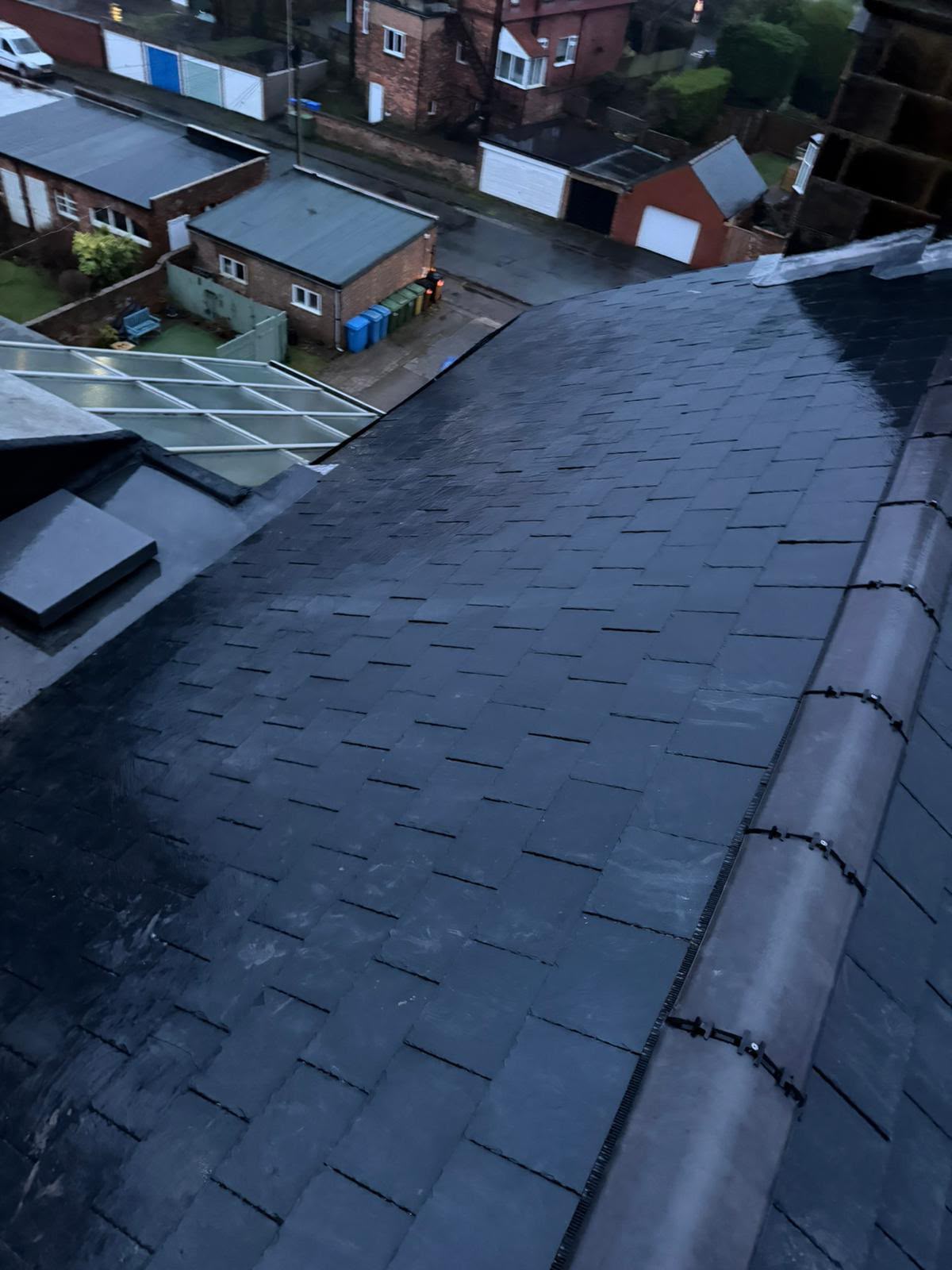
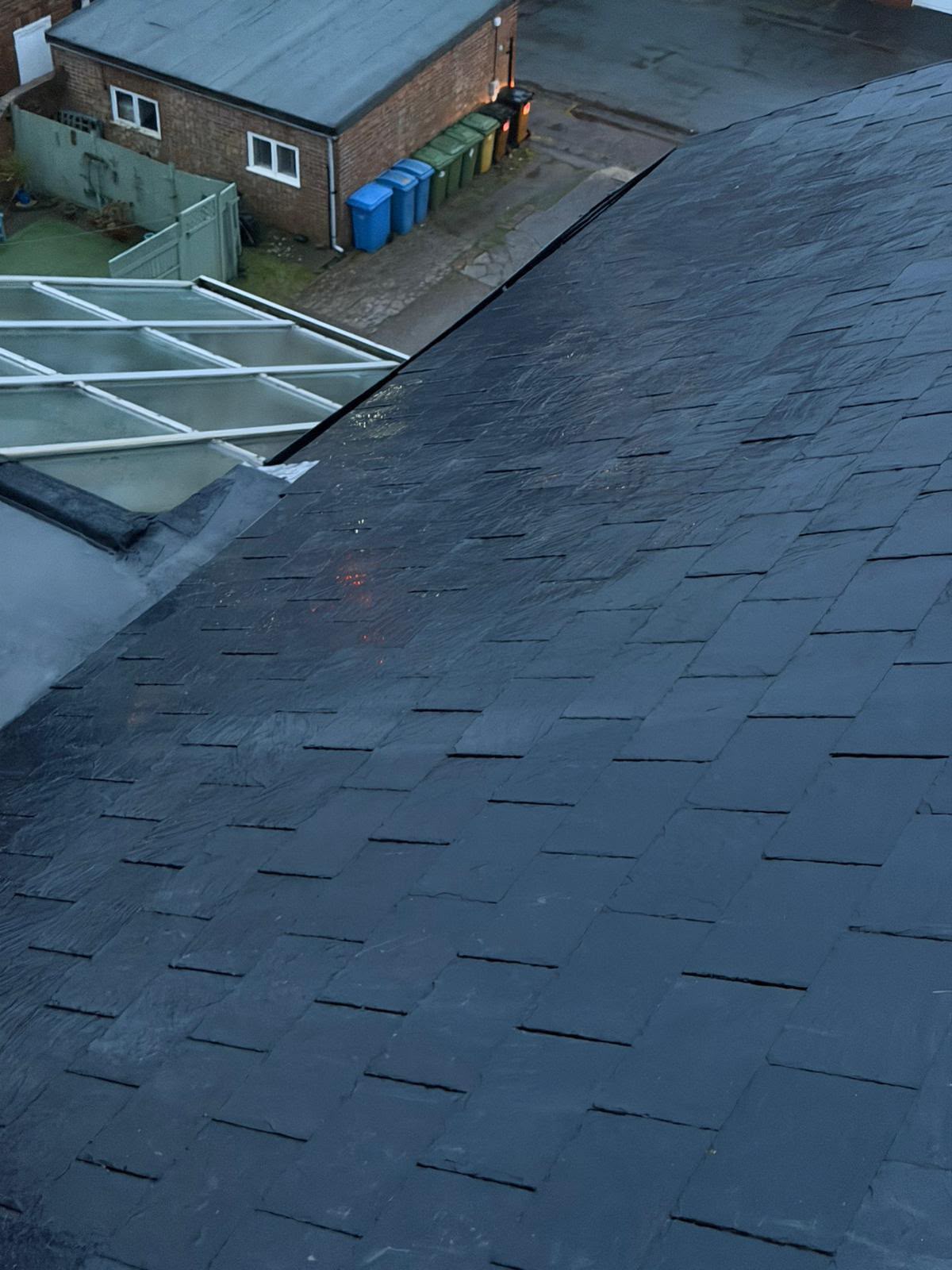
Ridge roll and ventilation
The ridge roll is a breathable, corrugated strip that seats over the apex, forms the ventilation gap and shields the ridge tile fixings. We specify Klober, Manthorpe, Cromar or Ubbink systems depending on the tile profile and the ventilation requirement.
Ridge-tile fixing
Each ridge tile is mechanically fixed to a batten screwed to the roof structure. We use manufacturer-matched screws and clips, torqued to spec, not generic hardware. This is what makes dry ridge wind-uplift compliant.
- One clip and screw per ridge tile
- Stainless or heavily galvanised fixings
- Approved batten to BS 5534 dimensions
- Continuous ridge roll along the whole apex
Ventilation strategy
Modern roofs need airflow to remove moisture from the loft. Where the eaves are already vented, ridge ventilation completes the airflow path. Where the eaves are sealed, ridge ventilation alone can be inadequate, we survey and specify the right combination.
Hip and monopitch adaptations
Hipped roofs need matching dry-hip components, a continuous system that also seals and mechanically fixes the hip tiles. We fit dry hip alongside dry ridge as one job, or convert one and leave the other where budget dictates.
Retrofit vs new-build
On new-build roofs, dry ridge is Building Regs standard. On retrofit conversions, we're replacing a failing mortar bed with a compliant mechanical system, same effect, longer service life. Both processes are similar; the retrofit adds the strip-out phase.
Residential vs commercial
Domestic dry ridge is nearly always on standard pitched roofs, houses, extensions, garages. Commercial dry ridge extends to workshops, church roofs, agricultural buildings and light-industrial pitched roofs, where extended ridge lengths take a continuous system for cost.